Coastal Flood Warning
The National Weather Service has issued a Coastal Flood Warning stating that historic water levels are expected to result in widespread moderate to major coastal flooding tonight into tomorrow.
Possible Road Closures
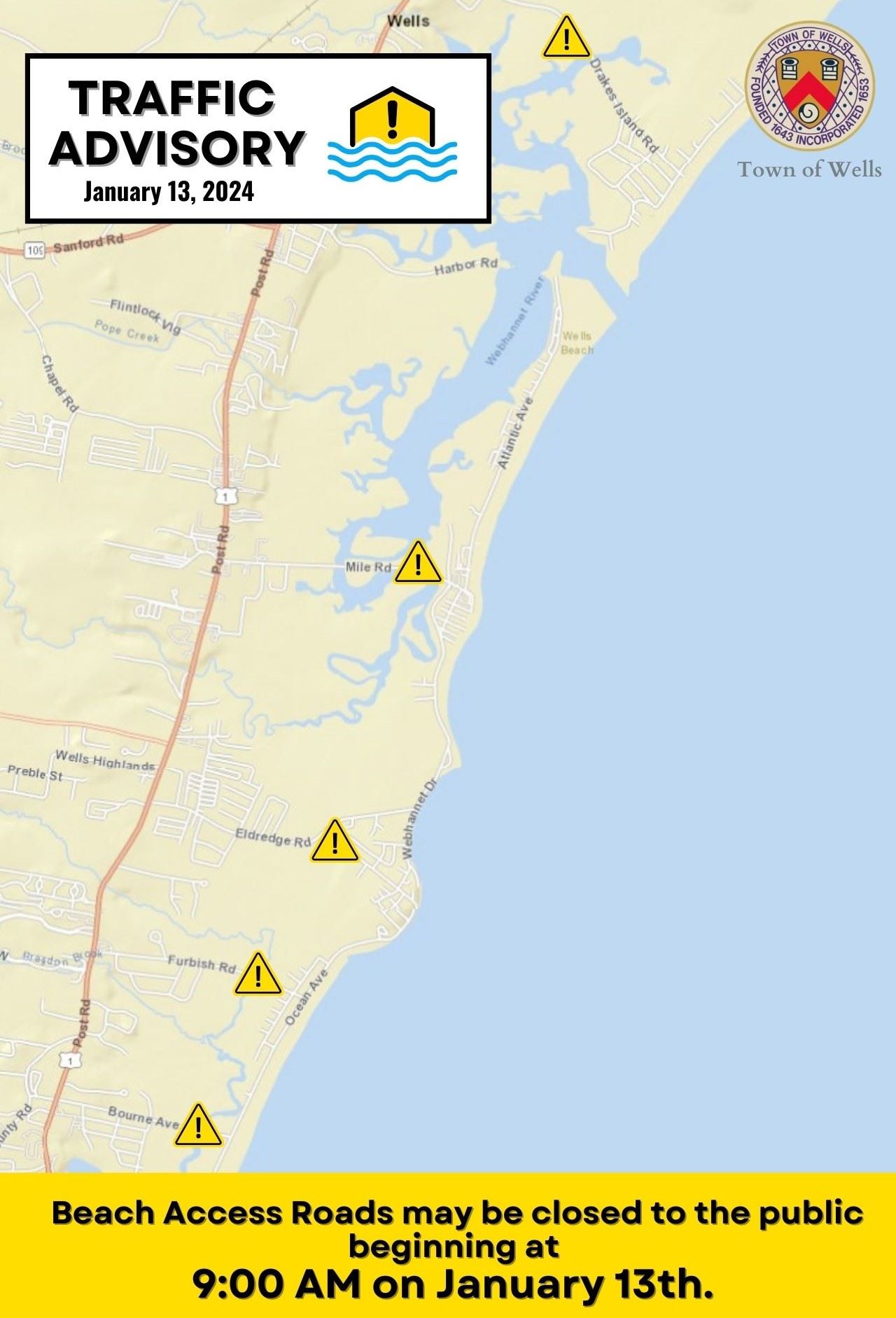
Due to the expected coastal flooding impacts of Saturday’s storm, the following beach access roads MAY be closed tomorrow morning starting at 9 AM and will not reopen to the public until it is safe.
- BOURNE AVENUE
- FURBISH ROAD
- ELDRIDGE ROAD
- MILE ROAD
- DRAKES ISLAND ROAD
Please make travel plans accordingly. We ask that you stay home if possible and do not venture out to flooded areas. Other coastal roadways may also be subject to closure depending on conditions.
For your safety during this dangerous storm, please do not drive around barricades.
For those in areas prone to coastal flooding, we recommend relocating to a safe location before 9 AM. Travel on the roads along the ocean could be restricted or impassable during the storm and emergency personnel may not have access. Please keep this in mind when making your plans if you live in this area.
The National Weather Service reports that coastal flooding is the biggest threat with this storm as major coastal flooding is expected with beach erosion and 2-4 feet of coastal inundation. That means areas that experienced excessive flooding in the last storm should expect the same during tomorrow’s storm. A high wind warning is issued for the coast of Maine with power outages likely due to 65 mph wind gusts. High tide on Saturday is at noon, but flooding is likely to start from around 9 am and could last until 3 pm.
Preparedness Tips
As we prepare for the upcoming weather conditions, it's important to remember a few key safety and preparedness tips:
- Check on Your Neighbors: Especially those who may need extra assistance, such as the elderly or those with mobility challenges. A quick check-in can make a big difference in ensuring everyone's safety and well-being.
- Charge Your Phones: Make sure your mobile devices are fully charged ahead of time. This will help you stay connected and receive timely updates about the weather and any emergency instructions.
- Check Flashlight Batteries: Ensure that your flashlights are in working order and have fresh batteries. Having a reliable light source is crucial in case of power outages.
Generator Safety
If you have a generator, remember to keep it outdoors and away from windows, doors, and vents to prevent carbon monoxide poisoning. Never run a generator inside your home or garage, as this can be extremely hazardous.
- Using portable gas-powered generators can quickly cause carbon monoxide (CO) poisoning when they are run in enclosed or partially enclosed spaces. CO is a colorless, odorless gas formed when burning most types of fuels.
- How do you keep a generator dry if you lose power and it's raining?
- It's unsafe to run them in the garage, barn, shed, or on the porch. Instead:
- Place the generator outdoors 20 ft from windows and doors. Do not put a generator in a closed or partly closed space, like a basement, cellar bulkhead, garage, or porch, even if doors and windows are open.
- Operate on a dry surface under an open, canopy-like structure.
- Protect your family from CO poisoning, and electrocution.
- Follow the safety instructions for operating your portable generator.
- Do not use outdoor cooking devices indoors like gas or charcoal grills and gas camp stoves.
- Place a battery-operated carbon monoxide detector near each sleeping area in your home. Look for the Underwriters Laboratory "UL certification" marked with the "Station Carbon Monoxide Alarm" statement.
- Check CO detectors regularly to be sure they are functioning properly.
- Warning signs of CO poisoning are similar to flu symptoms that include headache, nausea, vomiting, chest pain, dizziness, drowsiness, confusion or altered mental status.
- If carbon monoxide poisoning is suspected, leave the house at once, call 911, and do not go back into the building until the fire department tells you it is safe.
Prepare and be Safe
“High tides, heavy surf and wind-swept waves could make the coast extremely dangerous. For their safety we urge citizens to stay away from the coastline during this significant storm,” said MEMA Director Peter Rogers. “Coastal residents need to make plans now for flooding, possible road closures, and always follow guidance from local officials.”
For more emergency preparedness tips and additional information regarding this storm, visit the MEMA website found here.
Thank you for your understanding, and please stay safe this weekend!